Showing posts with label Tourism. Show all posts

Wednesday, August 08, 2012

Italian Palaces, Castles Put on Market

For investors longing to own an Italian palace, castle or other historic property, now might be the time to strike. The Italian government and numerous cities and other public agencies are putting billions of euros of surplus properties on the block as a way of raising revenue.

Prime Minister Mario Monti's plan for the economy, which is close to final passage, includes the sale of 350 buildings along with cuts to public spending and other austerity measures. The government hopes to raise about €1.5 billion ($1.86 billion) through the property sales, according to the Agenzia del Demanio, the agency that manages the state's real-estate assets.

The 350 properties include army barracks in Bologna, which were formerly occupied by the Defense Ministry, and Soriano nel Cimino's Orsini Castle, in the Lazio region, which was built by a pope in the 1270s and later used as a prison.

The city of Venice has put a €19 million price tag on the 18th century Diedo Palace, which served as a criminal court for years and is now being marketed to foreign investors by Hera Immobiliare. It is one of 18 properties Venice has put on the block.

Milan is selling more than 100 buildings, including the Palazzo Bolis Gualdo at 12 Via Bagutta, in the city's famous fashion district. That building's price tag: €31 million.

Italian agencies at all levels of government own about €42 billion of properties that are surplus or underused, according to a report by Edoardo Reviglio, chief economist of Cassa Depositi e Prestiti, a bank that is 70%-owned by the government.

Turning some of this real estate into cash would be a fast way to raise revenue for the country's cash-strapped municipalities, states and national government.

But the plan to sell properties faces headwinds. Many institutional investors, fearing a collapse of the euro, essentially have redlined Italy as well as other members of the euro zone with the biggest financial problems, including Spain and Greece. Moreover, investors would have to assume the risk of dealing with the notoriously slow Italian bureaucracy, fixing up the properties and then finding tenants at a time of anemic economic growth.

That isn't to say some investors aren't giving the properties a look. Alessandro Mazzanti, chief executive of real-estate services firm CBRE Group Inc.'s Italian operation, says many U.S. opportunity funds, which look for high-risk, high-return deals, are looking. "Names that you know have been in here the last week talking to us," he said, declining to be more specific.

Tuesday, July 10, 2012

China plans huge tourism project in Tibet capital

China on Sunday started work on a 30-billion-yuan ($4.8-billion) tourism project in Lhasa city, state media said, as it seeks to draw more travellers to the restive Tibet region.

The massive development in the regional capital will include a theme park, commercial district and residential area, Lhasa Vice Mayor Ma Xinming was quoted as saying by the official Xinhua news agency.

Construction on the first phase of the planned project, about two kilometres (just over a mile) from downtown Lhasa, will take three to five years, it said.

Lhasa was the scene of violent anti-Chinese government riots in 2008 and authorities have kept the city under tight security since then.

Tibetans have long chafed under China's rule over the vast Himalayan plateau, saying that Beijing has curbed religious freedoms and their culture is being eroded by an influx of Han Chinese, the country's main ethnic group.

Beijing, however, says that Tibetans enjoy religious freedom and have benefited from improved living standards brought on by China's economic expansion.

Ma said the project would create a "living museum" for Tibetan culture as well as relieving pressure on tourist attractions in Lhasa's old city and developing Tibet's tourism industry, Xinhua reported.

Buddhist pilgrims and tourists flock to Lhasa to visit the Jokhang temple in the city centre and the Potala Palace, former home of Tibet's spiritual leader the Dalai Lama.

On May 27, two Tibetans set themselves on fire in front of the Jokhang temple, the first such incident to hit the city following a string of similar acts in parts of China inhabited by the ethnic group.

Travel agents said Chinese authorities closed Tibet to foreign visitors shortly after the incident, though state media later denied any travel ban.

The tourism project will include a theme park dedicated to Princess Wencheng, a member of the Chinese royal court during the 618-907 AD Tang Dynasty who married a Tibetan ruler, Xinhua said.

Beijing has used the story to illustrate close historical ties between China and Tibet. Other features of the development include centres for highlighting Tibetan arts and customs, the Xinhua report said.

Last year, 8.5 million tourists visited Tibet, up more than 24 percent from 2010, official figures showed. The regional government is targeting 10 million visitors this year, producing tourism revenue of 12 billion yuan, the government has said.

Wednesday, June 13, 2012

Greece’s Tourism Woes Continue As Tour Operators Slash Prices

Amid speculation about a Greek euro exit and fears of ensuing social unrest, tourism officials worry that Greece could have a terrible summer season this year.

A repeat election on June 17 will likely determine whether Greece retains the common currency or returns to the drachma. The gloomy forecast has travel agents across the world offering discounted fares to try and convince travelers to visit the sun-soaked Greek Isles and historic monuments.

Agents in the UK and Germany, in particular, have offered steep discounts to help kick-start slumping demand as the economic crisis hits travel spending across Europe. Residents of the two nations account for a large percentage of Greece's visitors, but reports of anti-German sentiment and the fear of being stranded amid protests has left several would-be visitors leery. Many of the 2.2 million Germans who holidayed in Greece last year appear to be headed for other destinations this year such as Spain or Turkey.

London-based Olympic Holidays, a major seller of Greek package holidays in the UK, reduced its rates by up to 25 percent for peak season travel. Meanwhile, online hotel prices in Greece show an 8 percent decline this month compared with June 2011, according to Trivago.gr, with rates in Athens down by 22 percent over last year. Overall hotel rates in Greece average 100 euros for a twin room, considerably lower than most other European nations.

"The immediate result is the devaluation of our country in the international tourism market," the head of the Hellenic Association of Tourism and Travel Agencies, Giorgos Telonis, told Athens-based ekathimerini.com. "We are all feeling the impact on the tourism industry and the Greek economy and society."

Rick Steves, the popular European guidebook writer and television host, said tours in the country have been "as smooth and fun as ever -- virtually unaffected by the local political and economic events."

Friday, May 11, 2012

Missing tourist from Taiwan

A Taiwanese tourist is missing after a tour boat capsized in the reservoir of Ratchaprapa dam in Ban Ta Khun district of Surat Thani province on Thursday afternoon.

Surat Thani police confirmed that the missing tourist was a 47-year-old pilot from Taiwan. He was travelling with his friends from Taiwan, Singapore and Thailand.Initial reports said the missing tourist was from Singapore.

Rescuers from the Kusol Sattha Foundation plucked four survivors from the water after the accident. One of them was the Thai boat operator, identified as Adipong Wichiankaew, and three others were foreign tourists, who were not immediately identified.

The Ratchaprapa dam is a tourist attraction inside Khao Sok National Park.Eyewitnesses said four foreign tourists hired the long-tailed boat operated by Mr Adipong to take them out onto the lake for fishing and sightseeing. The boat capsized after hitting a floating tree trunk.

National park officials went out in a speed boat on a search and rescue mission but had still not found the missing tourist as evening fell.

Thursday, April 19, 2012

Tourism for Tomorrow winners unveiled

SINGAPORE, April 18 — The Norwegian town of Røros has been handed a prestigious sustainable tourism award by the World Travel and Tourism Council.

The town, a former mining centre, was recognised April 17 by the WTTC’s Tourism for Tomorrow Awards, one of the most high-profile events in responsible travel.

The judges, an international team of travellers, entrepreneurs, environmentalists and academics, concluded that Røros’s tourism efforts have been monumental in reversing the area’s environmental degradation, awarding it the ‘Destination Stewardship’ gong.

The Conservation award, which requires winners to have made a direct contribution to the preservation of nature, wildlife and biodoversity, was given to Inkaterra in Peru, a biodiversity research company which doubles as a luxury travel experience.

Guests at Inkaterra’s five hotels are promised a carbon-neutral stay, along with the knowledge that their vacation is helping the group to work with local people on projects designed to underline the importance of the fragile habitats in the Andes and Amazon.

The Community Benefit award went to the Saunders Hotel Group, a chain in the US which supports local charity and non-profit groups with financial backing, volunteer time and other in-kind help.

The Global Tourism Business Award went to luxury chain Banyan Tree, which beat US-based adventure holiday specialist REI Adventures and South Africa-based conservation tourism firm Wilderness Group.

The hotel chain was praised for its sustainability monitoring across its businesses, as well as for being one of the first global hospitality companies in the world to ban the sale of shark’s fin in all of their hotels, an example only just beginning to be matched by competitors.

Saturday, April 07, 2012

The shrinking holiday globe for tourists

Despite threatened strikes, fuel shortages, a lack of security staff and fewer pennies in our pockets, it seems escaping austerity Britain has never been more appealing. Some two million holidaymakers will be flocking to our ferry ports, train stations and airports this Easter for a foreign break. What has changed is not whether we go, but where, as socio-political issues, terrorism, natural disasters and monetary constraints have combined to tear up the holiday map as we once knew it.

The British travelling public has long been stoical in the face of adversity. After bomb attacks, disease outbreaks, earthquakes and floods, Britons were usually the last ones out and the first back in – particularly when there were bargains to be had. But no longer.

As social unrest swept the Arab world after President Ben Ali fled Tunisia in January last year, so tourism to North Africa went with it. Since the turn of the millennium, increasing numbers of Britons had grown tired of the Spanish costas’ traditional package fare and expensive euro, favouring instead Morocco, Tunisia and Egypt for good value and guaranteed sunshine. Britain’s operators adjusted their brochures accordingly. Then suddenly Tunisia was in revolt, President Mubarak was pushed from office in Egypt, Colonel Gaddafi was felled, Yemen’s president was forced to sign away his powers, Morocco and Bahrain were witnessing waves of protests, and Syria was ablaze.

A year later, Mounir Abdel Nour, Egypt’s minister of tourism, has announced that the number of tourist arrivals fell by a third last year, while many in the industry claim that the situation is far worse. As Nigel Richardson wrote in these pages following a visit to Egypt last month, some hotels are only 10 per cent occupied, and key historical sights are still only attracting a fraction of the normal tourist crowds.

Even the Red Sea resort of Sharm el-Sheikh – 320 miles from the turmoil of Cairo’s Tahrir Square – is struggling. The regular stream of British and Russian tourists in search of sun, sea and scuba-diving, has fallen to a trickle. Everyone, from hoteliers and restaurateurs to market stallholders and belly-dancing troupes, is feeling the pinch; some are defaulting on rent, others are temporarily closing shop. Even with a promised £8 billion investment in tourism from the government over the next five years, Egypt will need a lengthy period of social and political stability if it is to win back the holidaymakers.

Tunisia has suffered just as keenly from tourist apathy, but here it is more an issue of perception than reality. The sensationalist television coverage of the short-lived Jasmine revolution seemed to exaggerate the severity of the uprisings, which took place far from tourist areas. The country remains as safe and peaceful as it ever has been; yet visitor numbers have fallen by half in the year after the revolution. The new regime needs to play the public relations game – and fast – which is not easy when 50 per cent of your foreign exchange has been wiped out by the tourist decline.

Morocco, too, has seen a marked fall in visitors, though protests there against King Mohammed VI were comparatively limited. Jordan and Lebanon are also suffering a downturn in tourism as the architectural treasures of Petra and Baalbek remain unseasonably quiet.

In Kenya, it is terrorism and kidnappings that are keeping Britons away. At least six people were killed in Nairobi in a series of explosions last month, but it is a spate of recent tourist kidnappings near the Somali border that have preyed on holidaymakers’ worst fears. The Foreign Office warning against travel in this area has put a large number of resorts, including those in the popular Lamu Archipelago, out of reach of ordinary travellers, but the impact is being felt farther afield. According to Niel Alobaidi, commercial director for Hayes & Jarvis, one of Britain’s leading long-haul tour operators, bookings to Kenya are down by almost 60 per cent on last year.

“What has surprised us is that South Africa and Tanzania have also seen much reduced booking levels,” he said. “Previously these destinations have performed strongly whenever Kenya has suffered, but the current issues appear to be affecting demand all across eastern and southern Africa.”

The big winner seems to be Spain, with visitors up by eight per cent since the Arab Spring began. Portugal, France and Italy have also experienced rises, while Florida and Dubai are enjoying extra bookings as alternatives to Egypt and Tunisia for early-season sun.

Greece, however, is bracing itself for another summer of discontent. The wave of violent protests in Athens and Thessaloniki against the government’s austerity measures is deterring some holidaymakers from visiting even far-flung Greek islands. That wasn’t helped by William Hague’s warning earlier this month that British holidaymakers should register with authorities in Greece and prepare to evacuate if the crisis escalated.

“To claim that Britons living in Greece or visiting on holiday are likely to need emergency evacuation is ridiculous,” said Derek Moore, chairman of the Association of Independent Tour Operators. “The riots in London, Manchester and Birmingham last summer were on a significantly bigger scale than anything in Greece – yet did the Home Secretary, Theresa May, advise people against visiting the Cotswolds or the Lake District?” The reality, however, is that bookings have slowed considerably – and the tourist board is desperately short of funding, just when promotion is vital to remind holidaymakers of Greece’s appeal.

It is not just the short-haul holiday map that is being redrawn. Japan continues to suffer from the fallout from the tsunami and subsequent Fukushima nuclear catastrophe. Even hotels in Niseko, the leading ski resort in the far north of Hokkaido, have struggled to fill their rooms despite one of the greatest seasons for snow in living memory.

Turmoil has also reached the sandy shores of the Maldives, where the country’s first democratically elected leader was overthrown earlier this month. The Foreign Office has removed its warning against travel to the capital, Malé, although it says that further demonstrations are “likely”, and human-rights groups continue to urge holidaymakers to avoid any resorts linked to those involved in the coup.

Read more


Wednesday, April 04, 2012

Goa tourism industry to offer cheaper off-season packages

Panaji: Planning a vacation in Goa during the monsoon season would be cheaper now, as the hotel industry is designing attractive packages following the concessions provided by the state government.The Manohar Parrikar-led BJP government has offered 50 per cent concession on the luxury tax to mid and upper segment hotels during the off season.

Reacting to the sops, the tourism and trade industry has said that the relaxation in the luxury tax will help them to mitigate the hike in the air fares which had made off season packages expensive.

Chief Minister Manohar Parrikar, who is also the state Finance Minister, has proposed in the budget that all hotels are granted 50 per cent concession of tax payable during the off season commencing from May 01, 2012 to September 30, 2012, subject to prompt payment of tax and filing of returns in time.

Travel and Tourism Association of Goa (TTAG), which has been lobbying for such concession, said the move will help in making monsoon package more attractive, as the skyrocketing air fares had forced the off-season packages to be expensive.

"The hoteliers will be able to pass the benefit of concession directly to the customers," TTAG spokesman Ralph D`Souza said.Unofficial estimates reveal that around 1,500 medium and big hotels will be benefited from the incentives, while smaller hotels are exempted from paying luxury tax.

Last year`s off-season was blessed with the long weekends, which saved the industry from facing losses, D`Souza said adding that the average occupancy was around 75 per cent during weekends and approximately 60 per cent during the week days.

Last year`s off-season was blessed with the long weekends, which saved the industry from facing losses, D`Souza said, adding that the average occupancy was around 75 per cent during weekends and approximately 60 per cent during the week days.

In its pre-budget memorandum submitted to Parrikar, the TTAG had urged for concessions to the industry.The Goa Chamber of Commerce and Industry (GCCI) has termed this reduction as a "smart move", which will keep economy vibrant even during the off-season.

Tuesday, March 13, 2012

Turkey the tourist destiny


Turkey might be the world’s most contested country. Its landscape is dotted with battlegrounds, ruined castles and the palaces of great empires. This is the land where Alexander the Great slashed the Gordion Knot, where Achilles battled the Trojans in Homer’s Iliad, and where the Ottoman Empire fought battles that would shape the world. History buffs can immerse themselves in marvels and mementos stretching back to the dawn of civilisation.

Then again, if you want to simply unwind, spend an afternoon being pampered at a hamam, or let the warm waters off the Mediterranean coast lap at your toes. Adventure lovers can head east to Nemrut Daği National Park. Bon vivants need look no further than İstanbul, where the markets and bars are among the most stylish and atmospheric, and the mod Ottoman cuisine rates as the tastiest, in the world.

The country’s tumultuous history has left a deep legacy. People who’ve never had to suffer for an idea or fight for a patch of land can be overwhelmed by the passion of ordinary Turks for their country. But for ordinary Turks that passion finds its outlet, not in martial ardour, but in simple pleasures: family, food, music, football, and friendship. Turks have an inspiring ability to keep things in perspective, to get on with everyday life and to have a bloody good time in the process. Sharing their joy in the simple things is a highlight for every visitor.

Treat Turkey as that most quintessential of Turkish dishes, the meze, a table piled high with scrumptious treats. Throw away the menu, order a plate of everything and feast till you can’t go on.

Diamond Earrings

Friday, December 16, 2011

WHAT WAS STONEHENGE?


The Megalithic Stone structures, which exist not only in this country but also throughout the Continent of Europe, are a special feature of that period known as the Neolithic Age. As has already been shown, Stonehenge represents a very late type, erected at a time when the bronze culture had begun to overlap that of polished stone (Neolithic).

These stone structures can be roughly divided into three classes.

1. Single upright stones, or menhirs (Celtic = "high stone"), which may be commemorative of some great event or personage.

2. Dolmens (Celtic = "table stone"), in which a stone slab is set table-wise on three or four uprights.

3. Cromlechs (Celtic = "stone circle"). Circles enclosing barrows or dolmens.

Stonehenge is a highly specialised example of this last class. Round these cromlechs popular myth and superstition have crystallised themselves into tales of the devil and his works (as in the case of Stonehenge), ogres, giants, dwarfs, Sabbath breakers, and infidels, turned to stone. In nearly every case there is some story of the supernatural, which cannot be accidental, but which must have its root in past religious observance.

It is a recognised fact that the worship of stones is more widely distributed than any other primitive cult. Its almost universal distribution can be referred to the tendency of the half savage mind to confuse persons and things, and from seeming likeness of the inanimate to the animate, to endue the lifeless object with the virtue and power of the living object. This mental outlook is better understood in practice than in theory. A Melanesian native may come across a large stone, lying upon the top of a number of smaller stones. It suggests to him a sow with her litter of pigs, and he at once makes an offering to it, in the hope that he will secure pigs. In determining the function of Stonehenge, therefore, it will be useful to compare it with similar existing stone circles. The largest of these in this country is Avebury, not many miles distant from Stonehenge. Unluckily, to-day it is so ruined that its former greatness is hardly to be distinguished by the unskilled observer. Formerly comprising some hundreds of unhewn Sarsen stones, barely a score remain in position at the present day. In Avebury, as it was, can be found the early typic model of which Stonehenge is the final product. The use of the circle as a basic form is common to both. In Avebury the Sarsen is a rough unhewn monolith; in Stonehenge it is squared, dressed, and crowned with its lintel. All evidences of a slow evolution from Neolithic to Bronze culture. But whereas the circle alone is used at Avebury, Stonehenge has in addition the horseshoe series of Trilithons and foreign uprights, and in this particular differs from all other Cromlechs in this country. It is the climax of the Megalithic monument, and its use very certainly must have been connected with the religion of the race which set it up. It was, in short, a religious structure, probably used for the observation of the sun, and possibly connected with "nature worship."

The fact that the sun rises over the Hele Stone on the Summer Solstice, and that it can be observed in direct alignment with the centre of the Great Trilithon, can hardly be due to accident. Chance might bring two stones into such a position on the Solstice, but, in this case, the entire monument is so arranged as to place the rising sun in a due line with its axis on this particular day.

It will be well to consider the facts which must have been within the knowledge of the builders of Stonehenge, and to trace as far as may be their reasoning in the building of it.

To begin with, it is almost certain that at the time of building, there existed some primitive form of priesthood, or body of "wise men." This is quite compatible with the culture of the period. The existence of the Neolithic Long Barrows is sufficient evidence that man had, by this time, arrived at that particular culture which grasps the existence of a "spirit."

Death only terminated the existence of the body, and not that of the spirit. It was even able to return and enter another body, say that of a new-born infant, an animal, or tree. And being after the manner of human beings, spirits could understand human language and become accessible to human petitions. Thus a spirit might even prove a powerful friend or enemy. And the dwellings of these spirits would be those great powers which meant so much to a primitive people; the sun, moon, stars, rivers, forests, and clouds; from which arose the two great classes of spirit, the "ancestral" and the "spirit of nature." From this general body was developed a regular hierarchy of good and evil spirits, gradually ascending to the conception of one great creative spirit, or superior deity.

Diamond stud earrings

Read more


Thursday, July 07, 2011

Top 10 Tourist Destinations in India

Agra


Agra’s Taj Mahal is one of the most famous buildings in the world, the mausoleum of Shah Jahan’s favorite wife, Mumtaz Mahal. It is one of the New Seven Wonders of the world, and one of three World Heritage Sites in Agra.

Completed in 1653, the T?j Mahal was built by the Mughal king Sh?h Jah?n as the final resting place for his beloved wife, Mumt?z Mahal. Finished in marble, it is perhaps India’s most fascinating and beautiful monument. This perfectly symmetrical monument took 22 years (1630-1652) of hard labour and 20,000 workers, masons and jewelers to build and is set amidst landscaped gardens.


Jaipur / Udaipur


Lots of people flock to Jaipur to view the various forts and monuments in Jaipur which reflect its glorious past. Tourism is a significant part of Jaipur’seconomy. Some of the world’s best hotels are located here.

Forts & Monuments

  • Hawa Mahal
  • Amber Fort
  • Jaigarh Fort
  • Nahargarh Fort
  • City Palace
  • Jantar Mantar
  • Jal Mahal
  • Rambagh Palace
  • Chandra Mahal, The City Palace, Jaipur
  • Diwan-e-Aam, City Palace
  • Central Museum, (Albert Hall Museum)


Goa


Goa is Famous for its pristine beaches, infact 90% of all the tourism in Goa happens only for its beautiful beaches in Coastal Areas. Goa has two main tourist seasons: winter and summer. In the winter time, tourists from abroad (mainly Europe) come to Goa to enjoy the splendid climate. In the summertime (which, in Goa, is the rainy season), tourists from across India come to spend the holidays.

In 2008 there were more than three million tourists reported to have visited Goa, more than half million of whom were from Foreign visitors. Infact, many foreigners have made Goa as there home for its laid-back and relaxed lifestyle !


Kashmir

Kashmir was once called Heaven on Earth, and once of the most beautiful places in the world. However, in last couple of decades, terrorism has faded its charm – A place home to Himalayan Ranges.The State of Jammu & Kashmir has main three geographical regions known as “The Lesser Himalayas” or the “Jhelum Valley” (Kashmir), “The Inner Himalayas” or “The Indus Valley” (Ladakh & Frontier areas) also called “Trans-Himalayas”, and “The Outer-Himalayas” or “The Southern mountain range” (Jammu). The area of Jammu & Kashmir is 2, 22,236 square kilometers.


Kanyakumari

Though there are several places of tourist-interest in the town and district, Kanyakumari is especially popular in India for its spectacular and unique sunrise and sunset. The confluence of three ocean bodies – the Bay of Bengal, the Indian Ocean, and the Arabian Sea – makes the sunrise and sunset even more special. On balmy, full-moon evenings, one can also see the moon-rise and sunset at the same time – on either side of the horizon.


Kerala (Backwaters)


Kerala, situated on the lush and tropical Malabar Coast, is one of the most popular tourist destinations in India. Named as one of the "ten paradises of the world" and "50 places of a lifetime" by the National Geographic Traveler magazine, Kerala is especially known for its ecotourism initiatives, Beautiful Backwaters and Alternative healing massages.


Old Delhi


Delhi, Capital of India has many attractions like mosques, forts and other monuments that represent India’s history. The important places in Old Delhi include the majestic Red Fort. New Delhi on the other hand houses many government buildings and embassies, apart from places of historical interest.The Qutub Minar, Red Fort and Humayun’s Tomb have been declared World Heritage Sites.


Ajanta Ellora


Ajantha & Ellora are 28 – 30 rock-cut cave monuments created during the first century BC and 5th century AD, containing paintings and sculptures considered to be masterpieces of both Buddhist religious art and universal pictorial art.

The caves are located just outside the village of Ajantha / Ellora in Aurangabad district in the Indian state of Maharashtra.

Since 1983, the Ajanta & Ellora Caves have been a UNESCO World Heritage Site.


Darjeeling

Darjeeling in India owes’ its grandeur to its natural beauty, its clean fresh mountain air and above all, the smiling resilient people for whom it is a home. Known for its natural splendor, Darjeeling’s best gift to its’ visitors is the dawn of a new day. The mountains awaken first with a tentative peeking of the sun.

A steep ride, five kilometers from Ghoom, or an invigorating walk up a steep incline, leads sun worshippers to Tiger Hill. The air is chilly with darkness and damp. To the east, a dull orange sun emerged painting the sky with brilliant strokes of magenta, gold, orange and fuchsia. The snow capped Everest, Kabru, Kanchenjunga, Jannu and other peaks slowly emerge from slumber to start a new day. The sun worshippers gasp at the magnificent sight.


Mysore


Mysore is a tourism hot spot within the state of Karnataka and also acts as a base for other tourist places in the vicinity of the city. The city receives the maximum number of tourists during the period of the Dasara festival when festivities take place for a period of 10 days. One of the most visited monuments in India, the Ambavilas Palace (also known as Mysore Palace) is the center of the Dasara festivities.

Hope you have found this Top Ten Tourist Destinations in India article interesting. If you have any questions, do drop in a comment

What are you waiting for – Go ahead and book your travel tickets right now :)

All of us need to reward ourselves over a time for the stress toll taken both physically and mentally by us. One of the best ways to chill out is to take a vacation and here are some amazing worldwide vacation rentals you can consider booking for your vacations

Monday, June 27, 2011

TYPES OF SAFARIS IN INDIA

Man, machine and animals:
That rugged jeep had seen enough of your garage, take it out and hit the roads. Bikers roar your cruiser-buddy. Indian streets are winding, wooded, dirty, yet promise undulating gamble for the ‘roadies’. The romance between the man and the machine apart, Indian safari adventures mean animals as well, and a lot of them. Camels, horses, elephants -- which one are you planning to ride? India sightseeing is best done on animal back. Come to this mystic land, explore the unexplored, and leave rejuvinated! Team it up with extensive photography spree and you can host an exhibition, write for travel blogs (write us a travelogue), and what not!


Some of the best Indian safaris


Jeep Safari:Imagine driving in a jungle, and some predator gives you a chase for your life! Reminds you of the dinosaurs chase scene in The Lost World? Drive your blues away in the craggy hills and muddy roads, wildlife parks and beaches of this incredible land, India. In the trans Himalayan region, Leh-Ladakh and Kinnaur-Spiti promise those winding roads, high altitudes, deep gorges and everything that takes to get your heart throbbing and body sweating. The ‘Raid-de-Himalayas’, an annual car-rally, is something you must opt for if you land up just during the program. Rajasthan’s forested valleys and arid hills also give you a different kind of safari flavor. The Shekhawati and Mewar region, Udaipur and Jaisalmer are options you should give a check.


Biking Safari:


Those who have straightaway jumped to this paragraph sure must have read Che Guevara’s Motocycle Diaries or at least seen the movie. And those who have not, and still is a biking-maniac, should check it out, for it inspires endlessly to embark on a biking safari. And if you have made your mind, here is India for you. The Himalayas again are the most enticing with winding and difficult routes, just perfect for the bikers. Ladakh, Himachal Pradesh regions like Kinnaur, Lahaul Spiti, Manali are the zones of interest. While, for rugged countryside biking, try Rajasthan.


Elephant Safari:

Best for exploring the jungles and having the closest and the best possible wildlife encounters, elephant safari is the most common safari option. The national parks and sanctuaries, have safari tours with trained mahouts (guides). Corbett National Park, Periyar Widlife Sanctuary, Kaziranga National Park are famed for their elephant safaris. The sightseeing safaris are best conducted by Rajasthan Tourism to reach their hill-top Forts and of course to tour tourists around the city, alongside their camels.

Camel Safari:

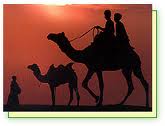
Wobbling on the camel back is fun, but minus the back-aches. But roosted on its hunch-back as you tour the varied attractions or scale the deserts, anything and everything feels worth the experience. In the Thar Desert of Rajasthan, around Jodhpur, Jaisalmer (Sam sand dunes), and Bikaner, toddling though palaces, old havelis (mansions), oasis --- is rated the best of camel-safari escapades. Jaisalmer to the Rann of Kutch in Gujarat is another exciting route. Special camel safaris are also organized round Pushkar and Nagaur in the winter season of October to March, when these two cities have their popular cattle fairs. Chambal camel safari a must for Agra visitors, that begins with a river cruise conducted by the Pathanias (attraction: close encounters with Ghariyals and Crocodiles) and the camel safari, which takes you to the picturesque Atar Fort.


Vacation Rentals

Friday, June 10, 2011

TADA - A good place for trekking

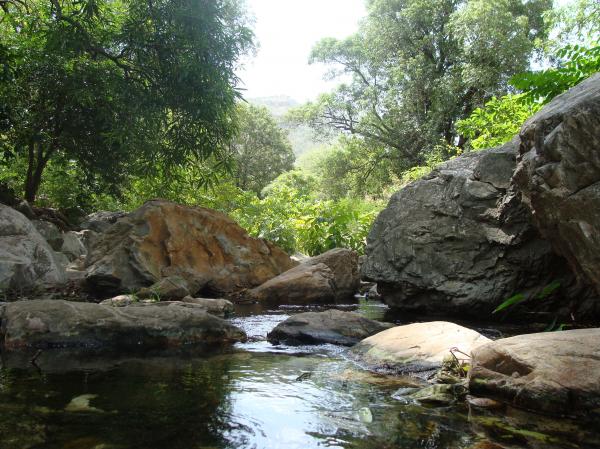
Tada falls or Ubbalamdugu Falls is in Tada mandal of Nellore district in India. It is situated on the border of Tamil Nadu and Andra Pradesh. It is situated around 95 km from Chennai.

Its a good for teen age guys to enjoy a safe trekking and it is still a nice spot for trekking without the usual buzz of people and shops surrounding you.

The best time to visit Tada would be after the rainy season, which I feel would be sometime between December and February. (Remember it is the North East monsoon which brings rains to these parts of India.) Even a visit during the rainy season would be fun, but you would have to be extra careful during the trek as it will be slightly difficult to climb the rocks. e you have reached Basecamp 1 (the place where the cars are parked), the trek begins. (Believe me, it is called Base Camp). The total trek distance would be about 10kms to and fro with nearly 4kms in real rocky conditions. From here the mud road begins and if you are on SUV or two wheelers, you can go for another 1km. We stopped at Basecamp 1 and took out the stuff that we required to carry and set about on the trek at nearly 11am. And its really a good place trekking enjoyment

Monday, May 09, 2011

Masjid al-Haram-Saudi Arabia


Al-Masjid al-Haram pronounced "The Sacred Mosque", is the largest mosque in the world. Located in the city of Mecca, it surrounds the Kaaba, the place which Muslims worldwide turn towards while performing daily prayers and is Islam's holiest place. The mosque is also known as the Grand Mosque. Expanding over an area in excess of 4,000,000 square metres within the city of Mecca, Masjid al-Haram was built in 638 AD and has the capacity to be able to accommodate up to 4,000,000 people.

The Haram was built in the 7th century and has been modified, rebuilt, and expanded on a regular basis ever since. Major expansions took place in the 1980s and further work is going on today. The beginnings of the Holy Mosque were established under Caliph Omar Ibn al-Khattab. The caliph ordered the demolition of houses surrounding the Kabba in order to accommodate the growing number of pilgrims, then built a 1.5-meter high wall to form an outdoor prayer area around the shrine. During the reign of Caliph Uthman Ibn Affan, the prayer area was enlarged and covered with a simple roof supported by wooden columns and arches.

read more

Sunday, May 08, 2011

Sequoia National Park - California, USA


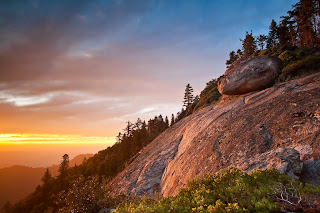
Sequoia National Park is a national park in the southern Sierra Nevada, east of Visalia, California, in the United States of America. It was established on September 25, 1890. The park spans 404,051 acres. Encompassing a vertical relief of nearly 13,000 feet, the park contains among its natural resources the highest point in the contiguous 48 United States, Mount Whitney, at 14,505 feet above sea level. The park is south of and contiguous with Kings Canyon National Park; the two are administered by the National Park Service together.

The park is famous for its Giant Sequoia trees, including the General Sherman tree, the largest tree on Earth. The General Sherman tree grows in the Giant Forest, which contains five out of the ten largest trees in the world, in terms of wood volume. The Giant Forest is connected by the park's Generals Highway to Kings Canyon National Park's General Grant Grove, home to the General Grant tree among other sequoias. The park's Giant Sequoia forests are part of 202,430 acres of old-growth forests shared by Sequoia and Kings Canyon National Parks. Indeed, the parks preserve a landscape that still resembles the southern Sierra Nevada before Euro-American settlement.

Friday, May 06, 2011

Glen Coe-Scotland


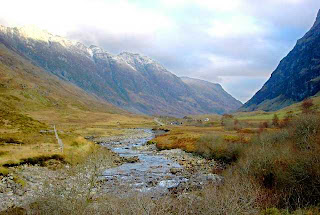
Glen Coe is a glen in the Highlands of Scotland. It lies in the southern part of the Lochaber committee area of Highland Council, and was formerly part of the county of Argyll. It is often considered one of the most spectacular and beautiful places in Scotland, and is a part of the designated National Scenic Area of Ben Nevis and Glen Coe. The narrow glen shows a grim grandeur. The glen, approaching from the east on the main A82 road, is surrounded by wild and precipitous mountains. Further west at Invercoe, the landscape has a softer beauty before the main entrance to the glen. The main settlement is the village of Glencoe. In summer the centre offers mountain biking, archery, orienteering, hill-walking, climbing, chairlift rides, photography, trail building, guided walks and home cooked food in the log cabin cafe. In winter skiing, snowboarding, sledging and avalanche rescue training are available.

Glen Coe is a very popular tourist destination: partly because of its scenic qualities and historical associations, partly because it is on the main road north, and also because of its attraction for walkers and climbers. It is famous for the quality, and variety of its winter climbing, most of its routes being comparatively easy of access from the main road.

Many walkers come to Glen Coe on the West Highland Way following the old military "Wade road" over Rannoch Moor which crosses the River Etive at the Kings House Hotel. From there it is about 2 km to the head of the glen, then about 2 km into the glen the Way ascends the Devil's Staircase, a steep, boulder-strewn "cut" (352 m high) which is part of the old military road and drove road north across the hills to Kinlochleven.

Thursday, May 05, 2011

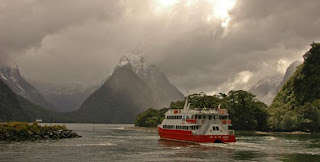
Milford Sound-New Zealand


Milford Sound-Famously titled ‘the eighth wonder of the world’ by Rudyard Kipling, Milford Sound is a fjord on New Zealand’s South Island that is encompassed within the Fiordland National Park. Surrounded by mountainous areas that stand in excess of 1,200 feet above the Tasman Sea which flows through the sound, the area is known for its attractiveness to animals, with many different varieties of fish living in the water, as well as seals and dolphins.

Milford Sound is a fjord in the south west of New Zealand's South Island, within Fiordland National Park and the Te Wahipounamu World Heritage site. It has been judged the world's top travel destination in an international survey and is acclaimed as New Zealand's most famous tourist destination.

Wednesday, May 04, 2011

Sahara Desert-Africa


The Sahara is the world's largest hot desert. At over 9,400,000 square kilometres, it covers most of Northern Africa, making it almost as large as Europe or the United States. The only larger desert in the world is Antarctica, classified as such because of very low precipitation rates. The Sahara stretches from the Red Sea, including parts of the Mediterranean coasts, to the outskirts of the Atlantic Ocean. To the south, it is delimited by the Sahel, a belt of semi-arid tropical savanna that comprises the northern region of central and western Sub-Saharan Africa.

The Sahara covers parts of several African nations including Algeria, Chad, Egypt, Libya, Mali, Mauritania, Morocco, Niger, Sudan and Tunisia. Most of the Sahara Desert is undeveloped and features a varied topography. Most of its landscape has been shaped over time by wind and includes sand dunes, sand seas called ergs, barren stone plateaus, gravel plains, dry valleys and salt flats. Around 25% of the desert is sand dunes, some of which reach over 500 ft (152 m) in height.

The Sahara has one of the harshest climates in the world. The prevailing north-easterly wind often causes sand storms and dust devils. When this wind reaches the Mediterranean, it is known as sirocco and often reaches hurricane speeds in North Africa and southern Europe. Half of the Sahara receives less than 20 mm of rain per year, and the rest receives up to 100 mm per year. The rainfall happens very rarely, but when it does it is usually torrential when it occurs after long dry periods.

read more

Monday, May 02, 2011

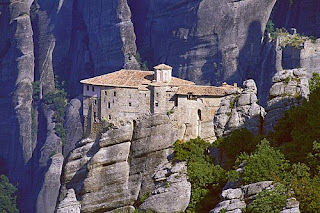
Meteora-Greece


The Metéora is one of the largest and most important complexes of Eastern Orthodox monasteries in Greece, second only to Mount Athos. The six monasteries are built on natural sandstone rock pillars, at the northwestern edge of the Plain of Thessaly near the Pineios river and Pindus Mountains, in central Greece. The nearest town is Kalambaka. The Metéora is included on the UNESCO World Heritage List.

U.N.E.S.C.O has characterized the Holy Meteora as a "monument of Humanity that has to be maintained". They don't belong only to Greece but also to the entire world. The same is valid for the Mount Athos, the Mistra, the Holy Monastery of Saint Lucas etc. So, the monasteries of the Meteora are included in the Monuments of world cultural Heritage, because they are a unique harmonious matching of Byzantine architecture and natural beauty.

read more

Friday, April 29, 2011

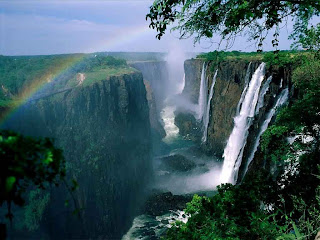
Victoria Falls-Zambia/Zimbabwe


The Victoria Falls is a waterfall located in southern Africa on the Zambezi River between the countries of Zambia and Zimbabwe. The falls are the largest in the world. The Zambezi River is the river that flows over the Victoria Falls and with the highest point being over 360 feet tall.

The river's annual flood season is February to May with a peak in April. The spray from the falls typically rises to a height of over 400 metres, and sometimes even twice as high, and is visible from up to 50 km away.

During the flood season, however, it is impossible to see the foot of the falls and most of its face, and the walks along the cliff opposite it are in a constant shower and shrouded in mist. Close to the edge of the cliff, spray shoots upward like inverted rain, especially at Zambia's Knife-Edge Bridge.

read more

Tuesday, April 26, 2011

Amazon Rainforest-South America


The Amazon rainforest, also known as Amazonia, is one of the world's greatest natural resources. Because its vegetation continuously recycles carbon dioxide into oxygen, it has been described as the "Lungs of our Planet". About 20% of earth's oxygen is produced by the Amazon rainforest. The Amazon rainforest gets its name from the Amazon River, the life force of the rainforest. The Amazon River begins in the Peruvian Andes, and winds its way east over the northern half of South America. It meets the Atlantic Ocean at Belem, Brazil.

Sixteen percent of all the world's river water flows through the Amazon delta. Twenty eight billion gallons of water flow into the Atlantic every minute, diluting the salinity of the ocean for more than 100 miles offshore. The Amazon rainforest watershed is home to the world's highest level of biodiversity.Amazonia receives about 9 feet of rain every year. Fifty percent of this returns to the atmosphere through the foliage of trees. Most of the Amazon River's water comes from the annual snowmelt high in the Peruvian Andes. Between June and October, the water level rises by 30 to 45 feet.

read more